Choosing between composite panel and insulated Smart Klip panel roofing can make a substantial difference to comfort and energy costs in Singapore’s demanding tropical climate. Both materials offer distinct advantages, but understanding how each performs under intense heat, heavy rain and constant humidity will help you make the right decision for your home or commercial space.
What Are Composite Panels and Insulated Smart Klip Panels?
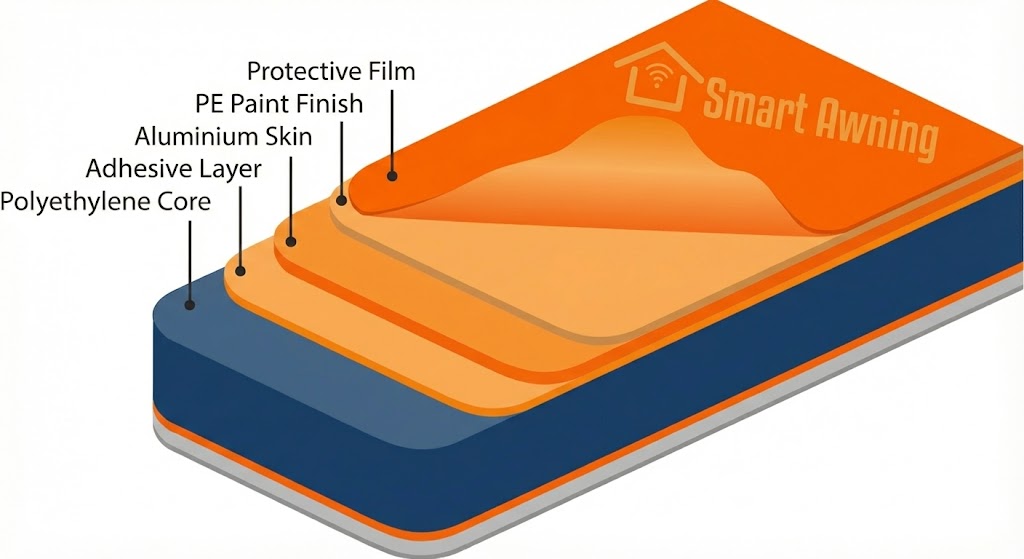
Composite panels, commonly known as ACP (Aluminium Composite Panel) roofing, consist of aluminium sheets bonded to a polymer or mineral core. This creates a lightweight, rigid structure typically 3-8mm thick. They’re widely used for balconies, awnings and building facades across Singapore because of their slim profile, modern appearance and corrosion resistance.
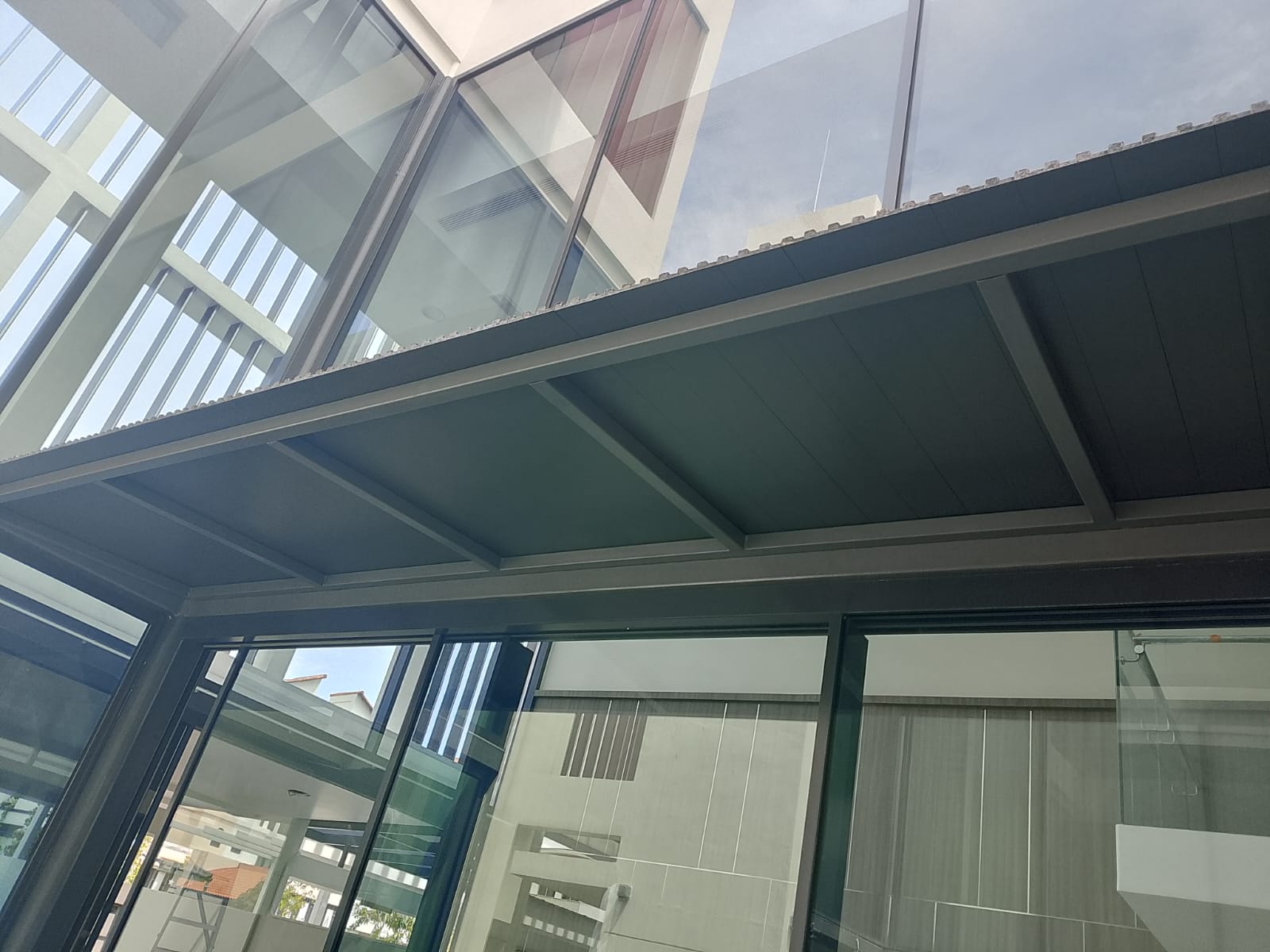
Insulated Smart Klip panels take a different approach. These are concealed-fix metal roofing systems similar to KLIP-LOK, featuring a high-density foam core – usually polyurethane or EPS – sandwiched between metal skins. The result is a structural insulated panel, typically 17.2mm thick, that combines outer weather protection, insulation and inner ceiling surface in one piece. The Smart Awning ISKP-001 model, for instance, measures 5800mm (L) x 150mm (W) and carries BS476 Part 7: 1997 Class 1 Fire Resistant certification.

Performance in Singapore’s Hot and Humid Weather
Heat Reduction
Singapore’s relentless sun demands serious thermal protection. Composite panels provide meaningful heat reduction compared to bare metal or fabric, using their insulating core and reflective coatings to keep spaces noticeably cooler. However, Smart Klip panels are engineered specifically for outstanding thermal efficiency, with their thicker foam core rated as “Very High (PIR/PUR)” insulation versus the “Low/Moderate” rating of standard composite panels.
This difference becomes crucial over air-conditioned areas. Smart Klip’s superior thermal barrier directly reduces cooling loads and energy costs, whilst composite panels work well for outdoor or semi-outdoor spaces where maximum insulation is less critical.
Rain Protection and Noise Control
Heavy downpours are routine in Singapore, and both materials handle weather differently. Composite panels are weather-resistant and durable, but rain noise remains noticeable during storms, and proper detailing of joints and flashings is essential to prevent leaks.
Smart Klip panels excel here. Their concealed-clip profile is specifically engineered for excellent watertightness, even on low-slope roofs, and the insulated sandwich structure significantly cuts impact noise from rain. If you’re covering a bedroom, study or any space where quiet matters, Smart Klip’s noise reduction is a genuine advantage.
Durability in Tropical Conditions
Both materials resist Singapore’s coastal humidity and UV exposure effectively. Composite panels use highly UV-stable coatings on aluminium skins that require minimal repainting over their lifespan. Smart Klip panels feature powder-coated aluminium or steel with closed-cell foam cores designed to resist moisture intrusion and maintain insulation performance long-term.
Installation and Structural Considerations
Composite panels are very lightweight and fast to install, making them ideal for balcony and patio roofs where reducing structural load and labour costs matters. Smart Klip panels, whilst still relatively light, are stiffer and can span longer distances, often reducing the number of rafters or support beams required. The clip-fix installation system speeds up construction significantly.
For maintenance, both options perform well. Composite panels can last 50+ years with minimal upkeep, whilst Smart Klip panels offer long-term energy savings that help offset their higher initial investment.
Cost and Best Use Cases
Composite panels are generally the more economical choice per square metre upfront, offering a solid balance of insulation, appearance and durability for residential awnings and balconies. Smart Klip panels typically cost more initially because of their thicker insulation and engineered panel system, but they deliver better indoor comfort and lower cooling loads – particularly valuable over air-conditioned areas.
Choose composite panel when you’re:
- Shading a balcony or patio without air-conditioning below
- Working with a tight budget but need durable, low-maintenance roofing
- Prioritising slim profile and modern aesthetics
- Covering building facades or showrooms
Choose insulated Smart Klip panel when you need:
- Roofing over living rooms, bedrooms or enclosed spaces with air-conditioning
- Maximum rain protection on low-slope roofs during heavy storms
- Significant noise reduction from tropical downpours
- Superior thermal barrier to reduce energy costs
- Applications in factories, industrial parks, carports or warehouse renovations
Which Panel Is Right for Your Project?
The choice between composite panel and insulated Smart Klip panel ultimately depends on what you’re covering and your priorities. For Singapore’s climate, Smart Klip panels are the stronger all-round performer when covering habitable or air-conditioned areas, delivering superior heat reduction, noise control and watertightness. Composite panels remain an excellent choice for cost-effective balcony and patio roofing where top-tier insulation is less critical.
Consider consulting a roofing specialist who can assess your specific site conditions, structural requirements and budget to recommend the best solution. Both composite panel and insulated Smart Klip panel systems have proven track records in Singapore’s demanding tropical environment – the right choice simply depends on matching the material’s strengths to your project’s needs.