If you’re considering a pergola system for your Singapore home, you’ve likely encountered two very different options: smart sliding louvre pergolas with motorized aluminium blades, and PVC pergolas with fixed plastic panels. The price difference can be significant, but so can the performance gap.
This guide explains the real differences between these two pergola systems, helping you understand which makes sense for your property, budget, and how you actually want to use your outdoor space in Singapore’s tropical climate.
Understanding Pergola Systems for Singapore’s Climate
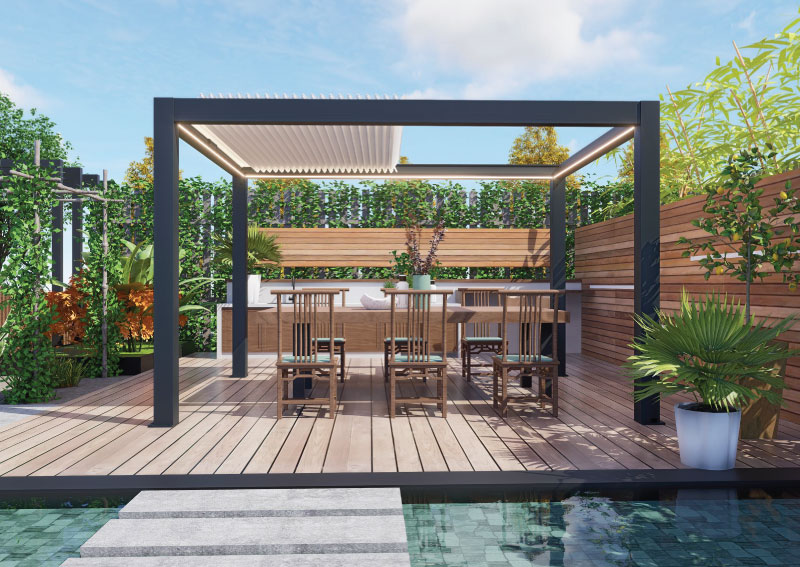
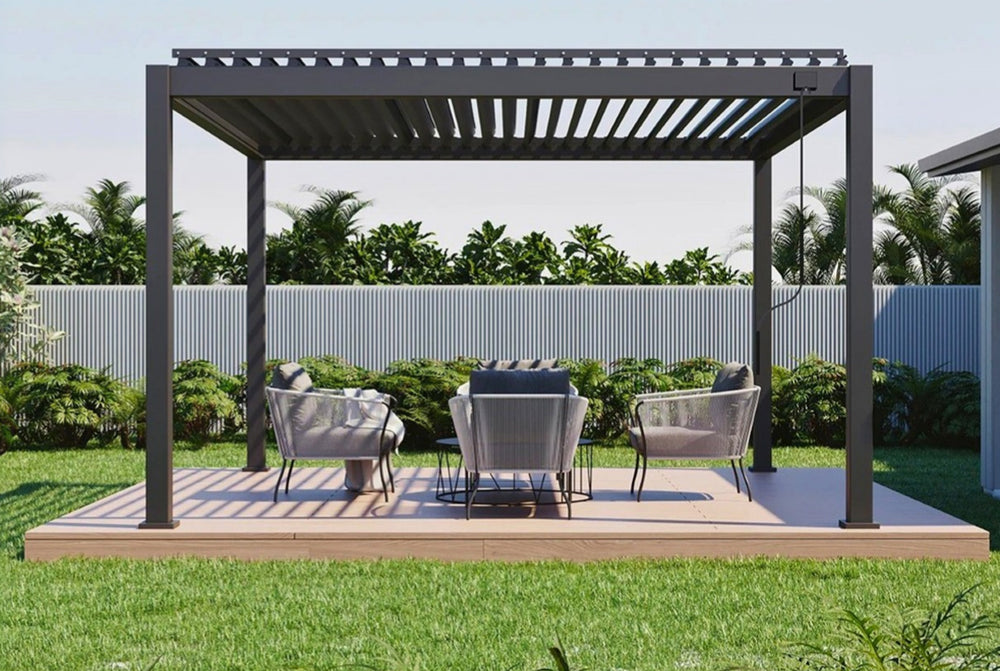
A pergola system is an outdoor structure designed to provide shade and weather protection while extending your usable living space. Unlike a simple awning that only covers you from above, a proper pergola system creates a defined outdoor room with posts, beams, and a roofing mechanism.
The key distinction from traditional pergolas is the roofing. While classic pergolas featured open lattice designs that provided minimal weather protection, modern pergola systems incorporate actual roofing solutions – either adjustable louvre blades or fixed panels.
Why Singapore’s Climate Demands More
Singapore presents unique challenges that make your pergola choice more critical than in temperate climates. Year-round intense UV exposure, sudden tropical downpours, high humidity levels, and strong winds at elevated heights all impact how well a pergola system actually performs.
You need more than just shade. Effective sun protection without creating a suffocating heat trap matters in Singapore’s climate. Rain coverage that actually keeps you dry during sudden afternoon storms is essential. Ventilation that prevents condensation buildup in humid conditions makes the difference between a usable space and an uncomfortable one.
This is where the fundamental difference between smart louvre and PVC pergola systems becomes apparent.
Smart Sliding Louvre Pergola: How It Works
A smart sliding louvre pergola uses motorized, adjustable aluminium blades as the roofing system. These blades can rotate through a wide range – typically from fully open to completely closed positions, usually rotating between 130 to 150 degrees depending on the system.
The mechanism is straightforward but engineered for precision. Each blade sits in a track system and connects to a motorized drive. When you activate the system via remote control, wall switch, or smartphone app, the blades rotate in unison to your desired angle.
The Aluminium Advantage
The blades are constructed from extruded aluminium, which matters more than it might seem. Extruded aluminium provides structural strength without excessive weight, resists corrosion in Singapore’s humid coastal environment, and accepts powder coating that protects against UV degradation and maintains appearance for years.
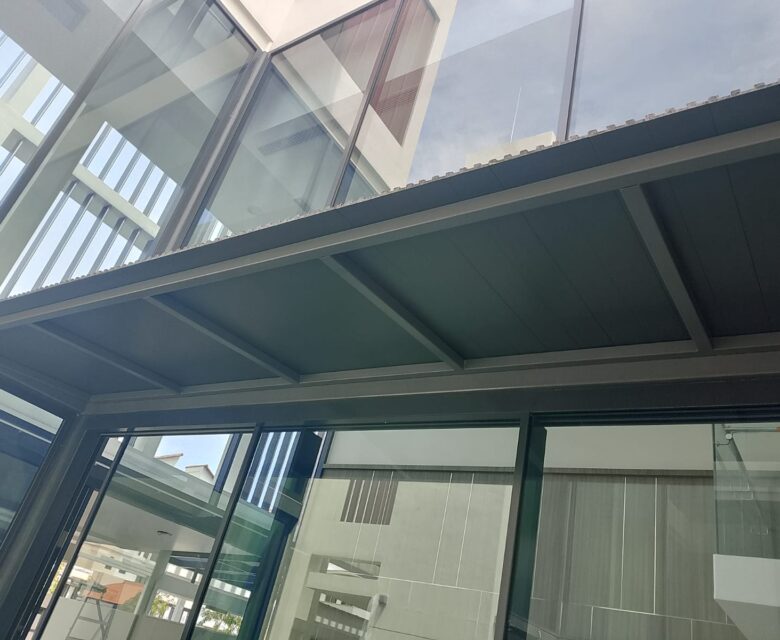
When the louvre blades close completely, they create an interlocking roof surface. The design includes integrated gutters along the blade edges that channel water away through the posts and into drainage systems. This transforms the pergola from an open shade structure into a weatherproof outdoor room.
Smart Features That Actually Matter
Modern louvre pergola systems often incorporate weather sensors that automatically respond to conditions. Rain sensors detect moisture and trigger the blades to close, protecting your outdoor furniture without requiring you to rush outside. Wind sensors monitor gusts and retract or close the system when wind speeds reach potentially damaging levels.
Sun sensors can adjust blade angles throughout the day to maintain consistent shade as the sun moves across the sky. For smart home enthusiasts, integration with Google Home, Alexa, or Apple HomeKit allows voice control and automation routines.
The motorized operation means you can stop the blades at any angle between fully open and fully closed. This granular control lets you optimize for specific conditions – partially closed for dappled shade with airflow, nearly closed to block late afternoon sun while maintaining ventilation, or fully closed for complete rain protection.
What Makes Louvre Systems Work in Singapore
The adjustability addresses Singapore’s core climate challenges in ways fixed systems cannot.
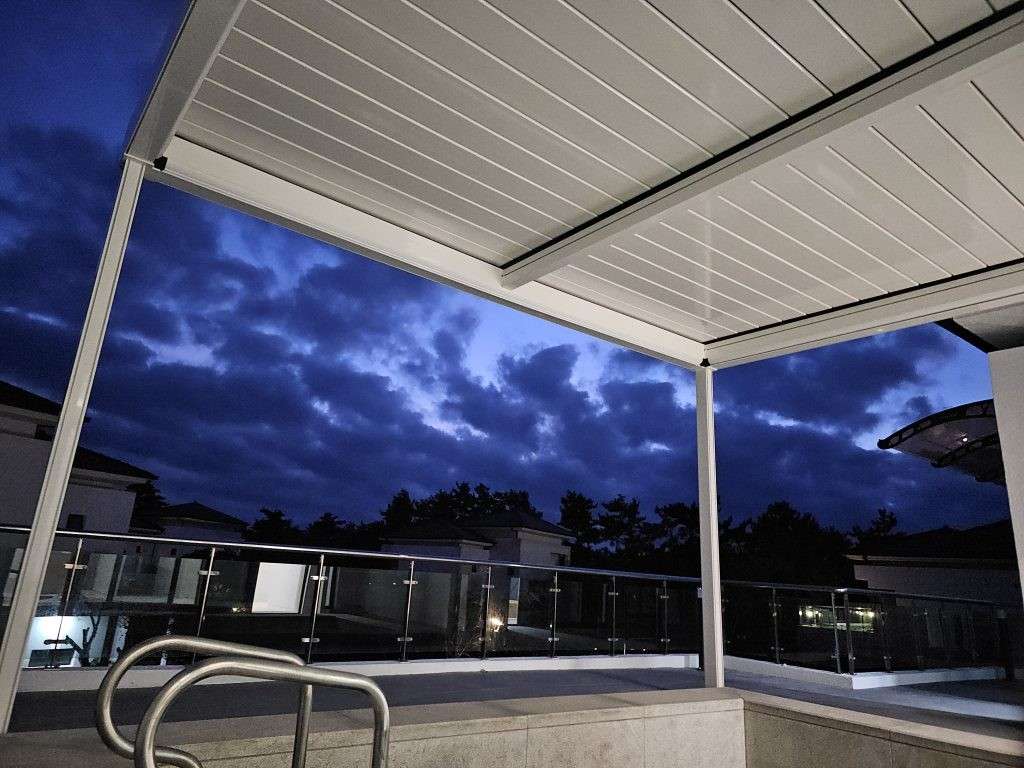
Temperature Control: When Singapore’s midday sun creates intense heat, you can close the louvre blades for complete shade while keeping them at an angle that allows hot air to escape. Fixed roofs trap this heat underneath, creating uncomfortable conditions even in shaded areas.
Humidity Management: High humidity causes condensation on solid surfaces. Adjustable louvre blades let you maintain airflow that prevents moisture buildup while still providing coverage. This matters for both comfort and protecting outdoor furniture from mildew.
Rain Flexibility: Tropical rain can start and stop suddenly. Fully close the louvres during a downpour, then open them partially when the rain lightens to let in fresh air while maintaining protection. Fixed systems give you no such flexibility.
Wind Resistance: When properly engineered, closed louvre systems present an aerodynamic profile that handles wind better than you might expect. Quality systems are designed to withstand hurricane-force winds when closed, making them suitable even for high-rise installations.
Louvre System Limitations
The advantages come with tradeoffs you should understand clearly.
Higher initial cost is the most obvious barrier. The motorized mechanism, quality aluminium construction, integrated drainage system, and professional installation with electrical work all add up to a significant investment compared to simpler alternatives.
Installation complexity means longer project timelines. Professional assessment, potential BCA approval for structural modifications, electrical work for the motors, and precise installation all take time. You’re looking at weeks rather than days for the complete process.
The motorized components require periodic maintenance. While the maintenance level is generally low, you’ll need occasional servicing of motors, sensors, and the track system. This represents both time and cost over the system’s lifetime.
Power dependency means the motorized operation requires electricity. While many systems include manual override options, the primary convenience factor disappears without power.
PVC Pergola: The Budget Alternative
A PVC pergola uses fixed polycarbonate or PVC panels as the roofing material, supported by an aluminium or steel frame structure. Unlike the adjustable louvre system, PVC pergolas are essentially static structures.
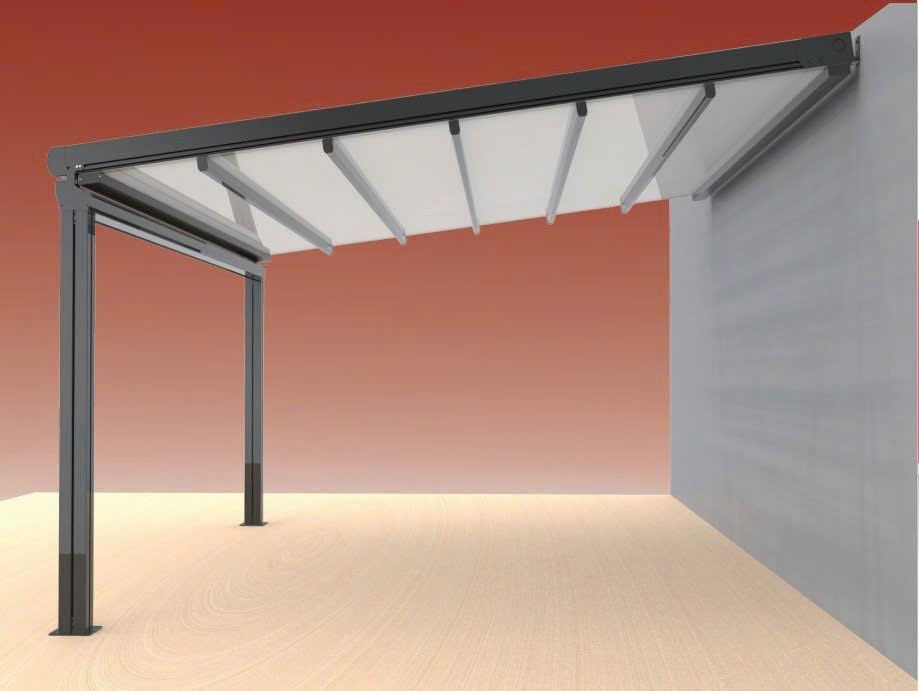
The panels span between the frame members, secured with gaskets and fasteners. Depending on the design, the panels may be clear for maximum light transmission, frosted for diffused light and privacy, or tinted to reduce heat and glare.
How PVC Systems Function
The simplicity is the point. There are no motors to maintain, no sensors to calibrate, and no electrical components to fail. The panels provide constant coverage from the elements – the same level of protection regardless of weather conditions or time of day.
Clear polycarbonate panels allow natural light through while blocking UV radiation. Multi-wall panels incorporate air chambers that provide some insulation. The panels attach to the frame with weatherproof seals designed to keep water out.
Basic drainage relies on the panel slope to direct water to gutters or off the edges. Unlike louvre systems with integrated drainage through the structure, PVC pergolas typically use conventional gutter systems.
PVC Material Reality
PVC and polycarbonate offer specific benefits that make them popular for budget pergola systems. The material doesn’t rust or corrode, so it handles moisture exposure without the decay issues of wood or the corrosion concerns of improperly treated metal.
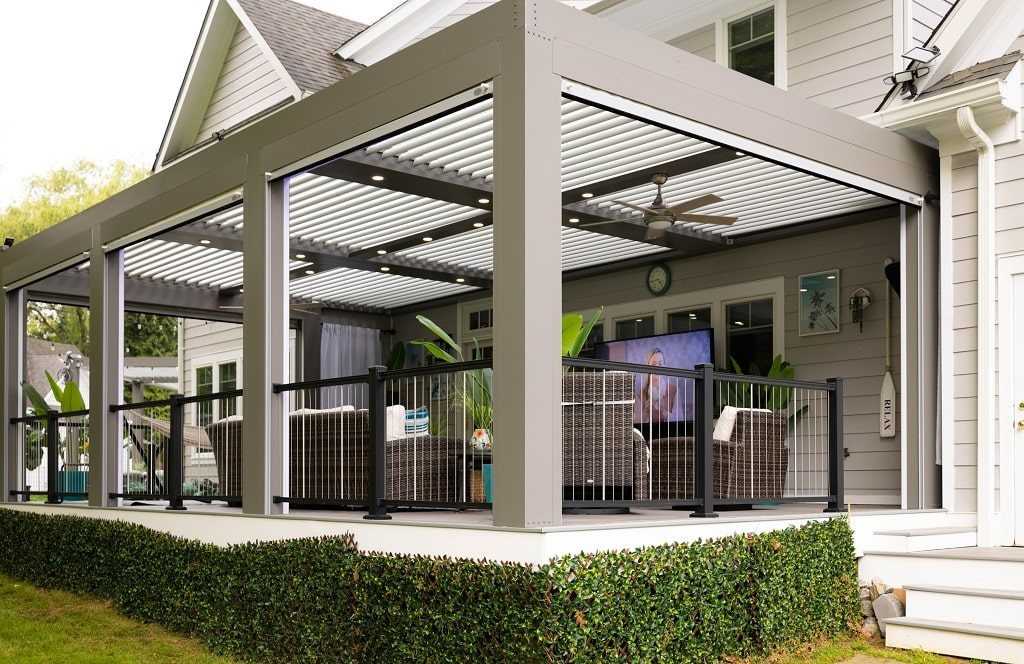
Maintenance requirements are minimal – washing with soap and water removes dirt and grime. There’s no painting, staining, or refinishing needed over the structure’s life.
Installation speed is faster than motorized systems because there’s less complexity involved. No electrical work, no motor calibration, no sensor setup. This translates to lower installation labor costs as well.
Where PVC Systems Fall Short
The budget-friendly approach creates limitations that become apparent in daily use, especially in Singapore’s climate.
Heat Buildup: Fixed panels create a greenhouse effect when the sun beats down on them. Even with good ventilation on the sides, heat gets trapped underneath the solid roof. During Singapore’s hottest hours, the space under a PVC pergola can become uncomfortably hot.
Condensation Issues: In Singapore’s humid environment, the temperature differential between the outdoor air and the cooler underside of the panels causes moisture to condense. You’ll notice water droplets forming on the underside of the panels, which can drip onto furniture and create a damp feeling.
Zero Flexibility: The fixed nature means you get the same level of coverage whether it’s overcast and you’d prefer more light, sunny and you want maximum shade, or raining and you need protection. There’s no adjusting to conditions.
Material Degradation: While quality PVC and polycarbonate can last many years, prolonged exposure to intense UV and heat can cause yellowing, brittleness, and loss of clarity in cheaper materials. The appearance deteriorates over time.
Noise: Heavy rain on plastic or polycarbonate panels creates significant noise. This might not matter for a walkway, but it can be quite loud if you’re trying to have a conversation under the pergola during a downpour.
Structural Limitations: PVC and polycarbonate have lower structural strength compared to aluminium systems. They can sag over time, especially in large spans or with heat exposure. Strong winds can damage panels more easily than engineered metal systems.
Side-by-Side: What Actually Differs
Let’s compare these systems on factors that affect your real experience.
Climate Control
Louvre pergola: Complete control over ventilation and shade. Adjust blade angle throughout the day to optimize comfort. Prevent heat buildup while maintaining coverage. Manage humidity through airflow adjustment.
PVC pergola: Passive structure provides fixed shade. No ability to adjust ventilation or light levels. Heat gets trapped under solid panels. Humidity causes condensation with no adjustment option.
For Singapore’s tropical climate where conditions change throughout the day and comfort depends on airflow, this difference is fundamental.
Weather Protection
Louvre pergola: When closed, blades create a weatherproof roof with integrated drainage. Open partially or fully when you want exposure to elements. Automatic sensor response to sudden weather changes protects the space and contents without requiring your intervention.
PVC pergola: Constant coverage provides consistent protection from rain and sun. No flexibility when conditions change. Panels may leak at seams or fasteners over time.
Both systems can keep you dry in rain, but only louvre systems let you adjust how much protection you want at any given moment.
Durability & Maintenance
Louvre pergola: Powder-coated aluminium resists corrosion in Singapore’s coastal humidity. Quality systems are engineered to withstand extreme winds and heavy loads. Maintenance involves occasional cleaning and periodic motor servicing. The structure itself can last decades with proper care.
PVC pergola: Material won’t rust or rot. Very low maintenance – just wash panels periodically. However, cheaper PVC can degrade under intense UV exposure over years. Panels may need replacement after extended use. Lower structural strength means higher vulnerability to damage from wind or impact.
Aesthetics & Property Impact
Louvre pergola: Clean, modern appearance with architectural quality. Customizable finishes integrate with contemporary designs. The premium look aligns with high-end properties. Visible mechanical sophistication signals quality investment.
PVC pergola: Functional, utilitarian appearance. More “plastic” look even with quality materials. Works for simple, clean designs but lacks premium appeal. Limited customization options.
How the pergola looks matters if it’s visible from inside your home or affects your property’s street appeal.
Cost Structure
Louvre pergola: Higher upfront investment covering motors, aluminium construction, integrated systems, professional installation, and electrical work. Moderate ongoing costs for occasional maintenance and servicing.
PVC pergola: Lower initial cost makes it accessible for budget-conscious projects. Minimal ongoing costs beyond basic cleaning. Potential panel replacement costs after years of UV exposure.
The cost difference is real and significant. Whether the louvre system’s benefits justify the premium depends entirely on how you value the additional functionality.
The Singapore Climate Factor
Singapore’s weather isn’t just hot – it’s consistently hot, consistently humid, with intense UV exposure and frequent tropical rain. This makes climate control more valuable than in temperate regions where you might only use outdoor spaces seasonally.
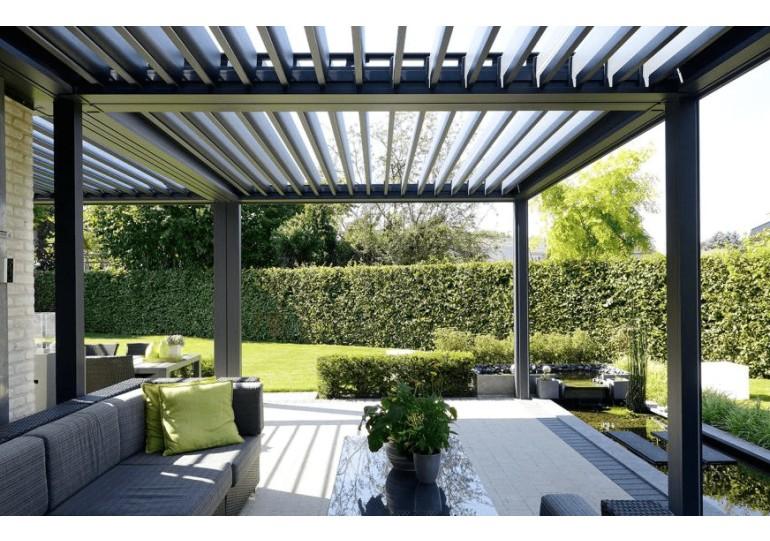
Every single day presents conditions where adjustable ventilation benefits you. Morning coffee under partial shade with full airflow. Midday protection from intense sun while preventing heat buildup. Afternoon rain protection that doesn’t turn your covered area into a sauna. Evening entertainment with customized ambiance.
PVC pergolas work in Singapore – many people use them successfully. But they work despite the climate, not because of it. You’re accepting the limitations as a tradeoff for lower cost.
Louvre systems work with Singapore’s climate. The adjustability directly addresses tropical challenges. Whether that’s worth the premium comes down to how much time you actually spend in your outdoor space and how much comfort matters to you.
Installation & Singapore Regulations
Installing any pergola system in Singapore involves navigating property-specific requirements and regulations.
BCA Approval Considerations
The Building and Construction Authority (BCA) oversees structural modifications to properties in Singapore. Whether your pergola requires BCA approval depends on factors including the structure’s size, location, how it attaches to existing buildings, and whether it’s considered a temporary or permanent installation.
Both louvre and PVC systems may require approval if they meet certain criteria. The more complex engineering of louvre systems doesn’t necessarily mean more difficult approval, but it does require professional engineering documentation.
MCST Requirements for Condominiums
If you live in a condominium, your Management Corporation Strata Title (MCST) has approval authority over external modifications. This is separate from BCA approval and can be more restrictive.
MCST guidelines vary by development. Some have specific rules about pergola types, colors, sizes, or even whether they’re allowed at all. Submit your plans to the MCST before proceeding with either system type.
The MCST approval process typically takes several weeks. Factor this into your project timeline regardless of which pergola system you choose.
Installation Timelines
Louvre systems require professional site assessment, engineering calculations if needed for approval, fabrication of custom components, installation of the frame and mechanical systems, electrical work for motors and controls, testing and calibration, and final inspection. The complete process from decision to completion typically spans multiple weeks.
PVC systems involve simpler assessment, fabrication, frame installation, panel mounting and sealing, and basic gutter setup. The timeline is shorter due to reduced complexity.
Both systems benefit from off-season installation when weather is more predictable and contractors have better availability.
Maintenance Requirements
Louvre pergolas need quarterly cleaning of tracks and blades to remove debris, inspection of seals and weatherproofing, motor and sensor checks at recommended intervals, drainage system verification, and occasional lubrication of moving parts.
Professional servicing once or twice yearly keeps the system operating smoothly. Address any issues promptly to prevent minor problems from becoming major repairs.
PVC pergolas require periodic panel cleaning, seal inspection to catch leaks early, gutter cleaning to prevent overflow, and checking fasteners for looseness over time.
The maintenance difference is real but not overwhelming. PVC systems are genuinely lower maintenance, but quality louvre systems aren’t maintenance nightmares.
Making Your Decision
Choosing between these systems isn’t about finding the objectively “better” option – it’s about matching the solution to your specific situation.
When Louvre Systems Make Sense
Consider a smart sliding louvre pergola if you use your outdoor space daily or several times per week. The climate control benefits compound with frequent use, making the investment more justifiable.
Premium properties benefit from systems that match their quality level. If you own a high-end condominium or landed property, the louvre system’s appearance and functionality align better with the overall property standard.
Long-term ownership changes the cost equation. If you plan to stay in your property for many years or decades, the higher upfront cost amortizes over extended use and enjoyment.
High-exposure locations like rooftop terraces, coastal properties, or high-rise balconies experience more extreme conditions where the louvre system’s weather resilience and adjustability deliver genuine value.
Smart home integration appeals to technology enthusiasts who want unified control systems throughout their property.
When PVC Systems Make Sense
Budget constraints are the most obvious factor. If the louvre system price point simply doesn’t work for your financial situation, a quality PVC system still provides usable outdoor coverage.
Occasional use reduces the value of adjustability. If you rarely use the outdoor space, paying for climate control features you won’t utilize makes less sense.
Rental properties or shorter ownership timelines favor lower-cost solutions. If you’re installing this for tenants or plan to move within a few years, the PVC system’s lower investment may be more appropriate.
Simple requirements like basic rain coverage for a walkway or utility area don’t need sophisticated climate control.
Questions to Ask Yourself
How many hours per week will you realistically use this outdoor space? The more time you spend there, the more the comfort difference matters.
What times of day will you use it? Morning and evening might be comfortable under any cover, but afternoon use in Singapore’s heat benefits significantly from active ventilation.
How sensitive are you to heat and humidity? Some people tolerate tropical conditions better than others. If you’re very heat-sensitive, the PVC greenhouse effect will bother you more.
What’s your actual budget, including installation and approvals? Get real quotes for both systems before deciding. The price difference might be less than you assumed, or more.
How long do you plan to own this property? Longer ownership makes higher-quality investments more sensible.
Does this pergola need to match your property’s overall quality level? A budget PVC system on a premium landed property creates aesthetic mismatch.
Conclusion
Smart sliding louvre pergolas and PVC pergolas represent fundamentally different approaches to covering outdoor space. Louvre systems provide active climate control, premium aesthetics, and weather-responsive flexibility through motorized aluminium blades and smart features. PVC systems offer basic weather protection and shade at lower cost through simple fixed-panel construction.
For Singapore’s tropical climate, the louvre system’s ventilation control addresses real daily challenges that fixed systems cannot solve. Heat buildup and condensation under solid roofs aren’t minor inconveniences in year-round hot, humid conditions.
But that doesn’t make PVC systems wrong for everyone. Budget realities, usage patterns, and property situations all influence what makes sense. A rarely-used space doesn’t justify premium investment. A rental property benefits from lower-cost solutions. Some people genuinely prefer simplicity and are willing to accept the comfort limitations.
The key is making an informed choice based on honest assessment of your situation rather than simply buying the cheapest option or assuming the most expensive must be better.
Get professional site assessments for both system types. Understand what approvals your specific property requires. See actual installations if possible to experience the real difference between adjustable and fixed systems.
Your outdoor space can genuinely extend your living area and add value to your property – but only if you choose a pergola system that matches how you actually want to use it in Singapore’s demanding tropical climate.

Ready to explore pergola options for your Singapore property? Contact Smart Awning for professional consultation, site assessment, and expert guidance on choosing the right system for your needs and budget.